DIY vs Professional Attic Insulation in Duncanville, TX
The Short Answer for Duncanville Homeowners
Duncanville homes built around 1978 — that's the median here — often have original insulation that's settled, degraded, or just plain wrong for Texas summers. If your attic has the old blown-in fiberglass that's gray and matted down, it's not doing its job. You're paying to cool the neighborhood.
Most folks can handle basic air sealing and adding rolled insulation in an unfinished attic. But if you have a finished attic, ductwork running through the space, or anything more complex than open floor joists, call a pro. The line between a smart DIY and a costly mistake is simple: if you can't see the bottom of the attic floor from the access door, you need someone who knows what they're looking at.
I've been in attics all over DFW for years. I've seen homeowners do great work. I've also seen attics where a DIY job made things worse — trapping moisture, blocking vents, or creating fire hazards. The question isn't whether you can do it. It's whether you should for your specific house.
Duncanville Attic Insulation: What You're Working With
Most Duncanville homes are mid-century ranch, split-level, or 1980s traditional styles. These houses weren't built for 96°F summers and 3,000 cooling degree days. The original insulation — if it's still there — was likely R-11 or R-19. That's a fraction of what the Department of Energy recommends for North Texas. The DOE's insulation map suggests R-49 to R-60 for attics in our climate zone.
Your attic in July hits well over 140°F. That heat pushes down through the ceiling drywall, through the ductwork, through every wall cavity it can find. Your AC runs longer. Your bills go up. With local electric rates around 12.1 cents per kWh from Oncor delivery, those extra hours add up fast.
The typical Duncanville lot is about a quarter acre. That means you likely have a standard attic layout — not a massive complex space, but not a tiny crawl either. If your home has ductwork in the attic (most do), that's where the real savings come from. Proper insulation around ducts can cut cooling costs more than anything else.
What a Proper DIY Job Looks Like
If your attic is unfinished — bare floor joists, no decking, no finished walls — and you're handy with basic tools, you can tackle air sealing and adding blown-in insulation yourself. This is the standard "rent the machine from the hardware store" job.
Start with air sealing. Every gap, every wire penetration, every duct boot. Use caulk and expanding foam. This matters more than the insulation itself. The EPA's ENERGY STAR program says air sealing can save up to 10% on annual energy bills. For Duncanville, that's real money.
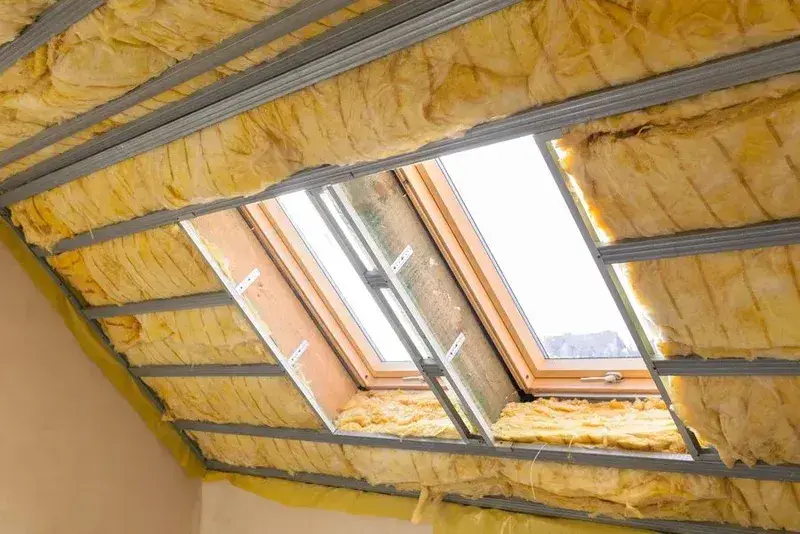
Then add insulation. Rent a blown-in insulation machine. Buy cellulose or fiberglass. Calculate your R-value needs. You want R-49 minimum. That's about 16 to 18 inches of blown fiberglass. Measure your attic square footage. Don't guess. Buy enough bags.
Safety matters. Wear a respirator, gloves, long sleeves, eye protection. Attic dust isn't regular dust. It's fiberglass, rodent droppings, mold spores. Work in the morning when it's cooler. Have a buddy outside who knows you're up there. Attics are dangerous — heat, nails, electrical, and the risk of falling through the ceiling.
When DIY Becomes a Bad Idea in Duncanville
There are clear signs you should not do this yourself. First, moisture. If you see water stains, mold, or damp insulation, stop. You have a leak or a ventilation problem. Adding insulation over wet material traps moisture against your roof deck. That leads to rot and structural damage. Call a pro who can diagnose and fix the source.
Second, knob-and-tube wiring. Duncanville homes built before 1950 may still have this. You cannot bury knob-and-tube under insulation — it's a fire hazard. A professional knows how to handle it safely or can recommend an electrician.
Third, ducts. If your attic has ductwork running through it, adding insulation requires care. You need to insulate under the ducts, not on top of them. You need to seal duct joints. You need to avoid compressing the insulation around ducts. Get it wrong and your HVAC system works harder, not less.
Fourth, access. If your attic access is a 30x30-inch hatch in a closet, moving bags of insulation up there is miserable. If you have to crawl on your belly to reach parts of the attic, forget it. Professional crews have the equipment and experience for tight spaces.
Fifth, time. A DIY attic insulation job takes a full weekend for an average home — if you know what you're doing. If you've never done it before, plan on three weekends. Miss a step and your savings disappear.
Hiring a Professional: What You Get for the Money
When you hire a crew like mine, you're paying for more than materials. You're paying for someone who's seen 40 years of attic problems. We know the exact R-value for Duncanville's climate. We know how to handle the 43-year-old homes with settled insulation. We know which attic vents to clear and which to leave alone.
A professional job starts with a full inspection. We check for moisture, mold, pests, wiring issues, and ventilation problems. We air-seal every penetration. We remove old, damaged insulation if needed. We measure and blow to the right depth. We check the work afterward.
Cost for a typical Duncanville home runs between $1,500 and $3,000 for blown-in fiberglass to R-49. That includes removal of old insulation if necessary. Compare that to your annual cooling costs on a 2,000-square-foot home with insufficient insulation — easily $200-$400 extra per summer. The payback is often under three years.
Duncanville has several insulation companies. You'll find names like Apex Insulation Solutions and DFW Insulation Pros. Shop around. Get three quotes. Ask specific questions: Do they air-seal first? Do they check for moisture? Do they handle pest issues? Do they offer a warranty on their work? The cheapest quote isn't the best deal if they skip the important steps.
The Big Decision: DIY or Pro for Duncanville Homes
Here's my honest take. If your attic is straightforward — open floor joists, no ductwork, no moisture issues, no weird wiring, and you have a full weekend — go DIY. Rent the machine. Buy the bags. Follow the instructions. You'll save money on labor and learn something about your house.
But if any of those red flags exist — moisture, old wiring, ducts, poor access, or you just don't want to spend your weekend covered in fiberglass dust — hire a professional. The extra cost is worth it for the peace of mind and the guarantee that it's done right.
For Duncanville specifically, the age of the average home (48 years) means you're more likely to encounter old insulation that needs removal, outdated wiring, and ventilation issues. These aren't deal-breakers for a determined DIYer, but they add complexity.
If you decide to hire, call around. Ask for references. Look for a company that's been in DFW attics for years. Check that they're licensed and insured. Ask about their air-sealing process. The right company will make your home more comfortable, lower your bills, and protect your biggest investment.
Either way, do something. An under-insulated attic in Duncanville is like leaving a window open all summer. You're bleeding money every month. ** ** **
** **
Get a free estimate for attic insulation in Duncanville
Fill out the form and we'll get back to you within 24 hours. No pressure, no upsells.
Also serving: Attic insulation service details · Attic insulation cost guide · Contact us
Nearby cities: Addison · DeSoto · DeSoto · DeSoto · Farmers Branch · All DFW locations
Last updated: 2026-05-29