Radiant Barrier DFW
Foil and spray-on radiant barrier installation in DFW. Real cost per square foot, foil vs spray-on comparison, and the honest case for when it pays back.
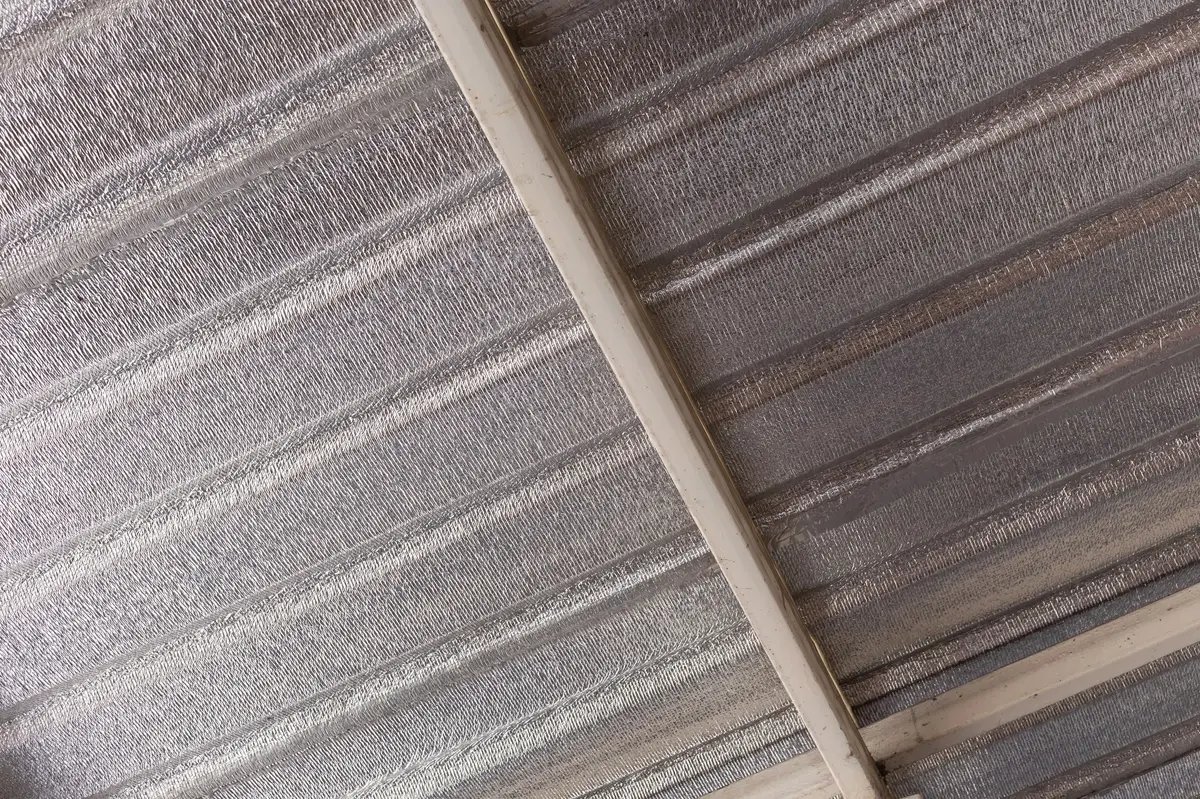
Traditional insulation is like a sponge — it soaks up heat and slows it down. A radiant barrier is a bouncer at a Deep Ellum bar: "Sorry heat, you're not on the list." A radiant barrier is a reflective sheet installed on the underside of your roof decking. It reflects radiant heat back at the deck instead of letting it radiate down onto your ceiling. In DFW, where an uninsulated attic hits 140-150 degrees on a July afternoon, that matters.
Radiant barrier works differently from insulation. Insulation slows conductive heat transfer through the ceiling assembly. Radiant barrier reflects radiant heat — the kind that travels in a straight line from hot roof decking down into your attic. They solve different halves of the problem, which is why we usually recommend them together.
One number to clear up before we go further: foil surfaces reflect up to about 97% of the radiant energy that hits them. That is not a 97% savings claim. Measured cooling-cost reductions are much smaller — roughly 5-10% in a typical DFW retrofit, and higher where the attic was badly under-insulated.
What radiant barrier installation costs in DFW
| Scope | Typical attic (1,500 sq ft) | Per square foot |
|---|---|---|
| Foil on attic decking | $500-1,200 | $0.40-0.70 |
| Spray-on radiant barrier | $800-1,600 | $0.60-1.00 |
| Full foil retrofit on rafters | $1,200-2,000 | $1.00-2.50 |
Two things move the price. Access is the big one: a low, cluttered attic with a small hatch costs more in labour than an open one. Timing is the other — if you are already replacing the roof, the deck is exposed and the labour is nearly free. That is the cheapest radiant barrier you will ever buy. If you retrofit later, someone has to get around the existing roof and insulation, and you pay for that visit.
We quote from an actual look at the attic, not a per-square-foot phone estimate. The table above is a realistic range, not a bid.
Foil vs spray-on vs perforated
| Type | Reflectivity | Best for | Watch out for |
|---|---|---|---|
| Perforated foil (deck) | Up to ~97% | Most DFW attics | Needs an air gap to work, and perforations let vapour escape |
| Solid foil | Up to ~97% | Rarely the right call here | Traps moisture in a humid climate |
| Spray-on coating | Lower than foil | Tight spaces, awkward geometry | Less reflective, harder to verify coverage |
Perforated is the right default in North Texas. Solid foil on the underside of a roof deck is a vapour barrier. Water vapour migrating up from the house hits it, cools, and condenses. Perforated foil has thousands of pinholes that let vapour pass while still reflecting radiant heat — reflective performance barely changes and the moisture problem largely goes away.
Spray-on is a ceramic coating applied to the decking. It is easier to apply around trusses, vents and wiring, but it reflects less than foil and coverage is harder to confirm. We use it where foil genuinely will not fit.
When a radiant barrier pays back — and when it does not
It pays back when the attic runs hot and the ceiling below it is not adequately insulated. It does not pay back if the attic already sits at R-38 or better with sealed ducts, because the radiant load is no longer your bottleneck.
I would rather talk you out of a job than sell you one that cannot work. Skip it if:
- Your insulation is already R-38+ and the ductwork is sealed.
- Someone proposes solid foil flat against the decking with no air gap.
- The quote is for foil laid across the attic floor over your insulation — that traps heat and moisture.
- Your actual problem is a leaking duct system or an ageing AC. Fix that first.
The order that pays back fastest in most DFW homes: air seal the ceiling plane, bring insulation to R-38 or R-49, seal and insulate the attic ducts, and then add a radiant barrier if the attic still runs hot. Current code calls for R-38 minimum (U-factor 0.030) in Climate Zone 3 for new construction — most DFW retrofit homes are below that.
Financing and payment
We give a written estimate before anything starts, with the scope and the price on paper. If the number needs to be spread out, say so on the estimate visit and we will walk through the payment options available at that time rather than quoting terms here. Utility incentives change, so we check what Oncor is currently offering for efficiency work rather than promising a rebate up front.
What the install involves
Foil is run across the underside of the rafters, leaving an air gap between the foil and the deck, with the reflective face pointing down into the attic. Penetrations — can lights, vents, wiring, trusses — are cut and sealed around so the barrier stays continuous. On a reroof, the same material goes down over the deck before the underlayment, which is why the labour cost nearly disappears.
The job is typically a single day for a normal DFW attic.
Frequently asked questions
Does a radiant barrier lower cooling costs in DFW?
Do I need both insulation and a radiant barrier?
Which is better, foil or spray-on?
Can a radiant barrier cause moisture problems?
Is it worth adding during a roof replacement?
How much does it cost in DFW?
Related reading
- Does a radiant barrier work in DFW? — the three conditions it needs, and when to skip it.
- Radiant barrier installation cost in DFW — the full per-square-foot breakdown.
- Radiant barrier during roof replacement — the cheapest time to add one.
- Radiant barrier vs attic insulation — which one first, and why.
- Radiant barrier with solar panels — how the two interact in DFW.
- DFW radiant barrier installation guide — the install, step by step.
- Is radiant barrier worth it on a new roof? — the honest payback math.
- Oncor attic insulation rebate in DFW — what the utility will pay toward the insulation half.
Ready for a free estimate?
(469) 895-2695Also explore: Attic Insulation · Spray Foam Insulation · Blown-In Insulation · Attic Ventilation · Air Sealing