DIY vs Professional Attic Insulation in DeSoto, TX
DeSoto Attic Insulation: DIY or Hire a Pro?
The right choice depends on your attic's condition. In DeSoto, most homes were built between 1970 and 1990. The typical ranch-style house has limited attic space and a low-pitch roof. Those attics were originally insulated with fiberglass batts, often around R-19 or less. Today's recommendation for North Texas is R-38 to R-60, according to the U.S. Department of Energy's Insulation Fact Sheet.
If your attic has clean, dry fiberglass batts that are simply too thin, adding more batt insulation on top is a straightforward DIY job. You buy the rolls, lay them perpendicular to the existing batts, and cover the area evenly. A weekend project for a handy homeowner.
But here's the thing about DeSoto's older homes. Those batts are often compressed from years of storage, dirty from poor air sealing, and stained from roof leaks. Compression kills R-value. Dirt and moisture lower it further. If your batts look gray, feel damp, or show signs of critters, DIY layering won't fix the real problem.
I've been in attics across DFW for years. The ones with compressed, dirty batts need removal and replacement. That's not a fun DIY job. Professional removal costs more upfront but gives you a clean start with proper air sealing and fresh insulation.
Ask yourself: Is my attic clean and dry? Can I access every corner safely? If yes, DIY might save you money. If not, call someone who does this every day.
The DeSoto Climate Challenge for Attic Insulation
DeSoto's summers are brutal. Average high temperatures in July exceed 96°F. Cooling degree days sit around 3,000 per year. That's a lot of hours when your AC is fighting the heat coming through the attic.
According to Energy Star's Seal and Insulate guide, proper attic insulation can save up to 15% on heating and cooling costs. In DeSoto, the savings come mostly from keeping the summer heat out. Winter savings are smaller because winters are mild.
With average electric rates around 12.15 cents per kWh, every degree your AC doesn't have to fight is money saved. A home with R-19 insulation in the attic lets far more heat through than a home with R-49. The difference on your bill can be significant month after month.
DIY enthusiasts often underestimate how much heat migrates through underinsulated attics. They might add a few rolls of batts but miss critical areas like the attic hatch, ductwork penetrations, and recessed lights. Those gaps can account for 20-30% of air leakage.
Professional crews use infrared cameras and blower door tests to find those leaks before they insulate. That's something DIYers rarely do. The result? Better performance for the same R-value.
If you're handy and your attic is straightforward, DIY can work. But if your utility bills are consistently high in summer, you may have hidden leaks that a pro can find.
Tools and Safety: What DIY Requires in DeSoto's Attics
Desoto's attics get hot. If you're going the DIY route, you need a plan for the heat. The temperature inside an attic can hit 130-140°F on a summer afternoon. Even in spring or fall, it's uncomfortable. Work early in the morning or wait until October.
Here's what you'll need for a basic DIY attic insulation job:
- Insulation rolls or batts – R-38 fiberglass batts are heavy. A single roll can weigh 30-40 pounds.
- Utility knife – For cutting batts to fit tight spaces.
- Measuring tape – To calculate the square footage of your attic.
- Knee pads – Attic floors are plywood or drywall. You'll be on your knees.
- Mask and goggles – Fiberglass insulation is irritating to lungs and eyes.
- Long sleeves and gloves – To prevent fiberglass itch.
- Lighting – Most attics have no light. A headlamp or work light is essential.
Safety is the big issue. Stepping through the ceiling is a real risk. You must only step on ceiling joists or boards laid across them. Drywall can't hold your weight. Falls through ceilings cause serious injuries and expensive repairs.
Electrical wires in the attic are another hazard. You need to avoid contact with live wires. And recessed lights rated IC (insulation contact) are safer to cover. Non-IC lights need clearance or a box to prevent fire risk.
Professional crews deal with these hazards daily. They have proper PPE, ladders, and experience. If you're not comfortable working in tight, hot, dark spaces, this ain't the DIY project for you.
A simple job might cost $200-400 in materials for a 1,000 sq. ft. attic. A professional installation typically runs $1-2 per square foot. The price difference reflects the labor, expertise, and peace of mind.
Common Problems in DeSoto's Older Ranch and Split-Level Homes
Walk through neighborhoods like Highland Hills or The Meadows, and you'll see mostly ranch-style and split-level homes from the 1970s and 1980s. These houses have low-pitch roofs and limited attic space. That design makes it hard to work in the attic, whether DIY or professional.
The original insulation in many of these homes is fiberglass batts, often loose, compressed, or shifted over time. Storage is common in these attics. Boxes, holiday decorations, old furniture. All that weight compresses the insulation underneath, cutting its effectiveness.
Another common issue: the insulation is dirty. DeSoto's older homes often have poor air sealing. Dust, pollen, and even rodent droppings accumulate in the fiberglass. This reduces R-value and creates a health concern during removal.
Many of these homes also have old ductwork that leaks. When the AC runs, it pulls hot attic air into the ducts. That conditioned air escapes, making the system work harder. Adding insulation without sealing the ducts is like patching a leaky roof.
Speaking of roofs, some DeSoto homes have had roof replacements without addressing the attic insulation. The old batt insulation stays in place, sometimes getting wet during re-roofing. Wet insulation is worthless.
Professional contractors who work in these neighborhoods know the common issues. They check for moisture, rodent damage, and duct leaks as part of the job. A good pro will air-seal first, then insulate. That's the right order.
DIYers often skip air sealing because it's tedious. But that's where the biggest savings come from. Without air sealing, you're just slowing heat transfer, not stopping air movement.
Cost Comparison: DIY Materials vs Professional Installation in DeSoto
Let's break down the costs for a typical 1,000 square foot attic in DeSoto. DIY route:
- R-38 fiberglass batt rolls: about $0.50-$0.70 per square foot installed by you. Total: $500-$700.
- Tools (knife, tape, mask, knee pads): $50-$100.
- Your labor: free, but figure 8-12 hours of hot, sweaty work.
Professional installation:
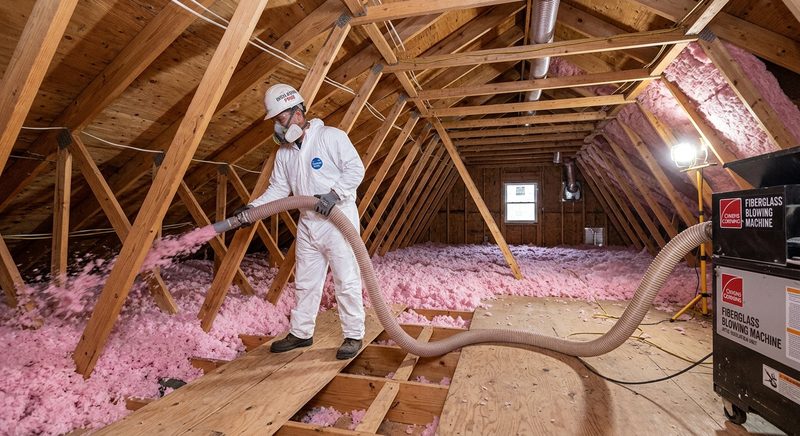
- Blown-in cellulose or fiberglass: $1.00-$1.50 per square foot installed. Total: $1,000-$1,500.
- Includes air sealing, removal of old insulation if needed, and cleanup.
- Typically takes a crew 4-6 hours.
The DIY route saves $300-$800 in labor costs. But that's only if you do it right. If you skip air sealing, use the wrong insulation, or don't achieve proper depth, the savings disappear because your bills stay high.
Professional installation also includes disposal of old insulation. Fiberglass batts that are dirty or animal-infested need proper disposal. That's a hassle DIYers face. Warranties are another factor. Most professional jobs come with a workmanship warranty. If something goes wrong, they fix it for free. DIY has no warranty.
In DeSoto's competitive market, companies like Apex Insulation Solutions offer free estimates. You can call for a quote and compare to your DIY material cost.
Insurance is also worth considering. If a DIYer falls through the ceiling, medical bills and repairs can easily exceed $5,000. Professional crews carry liability insurance. So the real question isn't just cost. It's risk. Can you handle the heat, the cramped space, and the details? If yes, DIY can save money. If not, the pro cost is worth every penny.
Local Regulations and Permits for Attic Insulation in DeSoto
DeSoto follows the Texas Residential Code for insulation. The minimum requirement for attic insulation in new construction is R-38. For existing homes, there's no code requirement to upgrade. But if you're doing a major renovation that involves the ceiling, permits may be required.
Generally, adding insulation alone doesn't require a building permit. However, if you're doing air sealing that involves electrical work or relocating ductwork, permits are needed. Most homeowners don't pull permits for insulation upgrades.
The bigger issue is safety. If you're using blown-in insulation, you need to be careful around electrical fixtures. Recessed lights, junction boxes, and exhaust fans all need clearance. The National Electrical Code requires 3 inches of clearance around non-IC rated fixtures.
If you hire a licensed insulation contractor, they handle permits and code compliance. Many contractors are familiar with DeSoto's requirements and can advise on any issues. For DIYers, the responsibility falls on you. Make sure you understand clearance requirements. Don't cover soffit vents – that's a common mistake that leads to moisture problems and roof rot.
Proper ventilation is critical. DeSoto's hot, humid summers mean your attic needs good airflow. Baffles at the eaves keep insulation from blocking vents. DIYers often forget these, leading to condensation issues.
If you're unsure about any of this, get a professional estimate. Most companies offer free inspections. They can tell you what's needed and what's not. Then you can decide if DIY is worth it.
Call (469) 895-2695 for a free estimate if you want professional guidance. ** ** ** ** **
Can I add new insulation over old fiberglass batts in my DeSoto attic?
What R-value is recommended for DeSoto attics?
How much does professional attic insulation cost in DeSoto?
Do I need a permit for attic insulation in DeSoto?
What's the biggest mistake DIYers make insulating DeSoto attics?
Get a free estimate for attic insulation in DeSoto
Fill out the form and we'll get back to you within 24 hours. No pressure, no upsells.
Also serving: Attic insulation service details · Attic insulation cost guide · Contact us
Nearby cities: Addison · DeSoto · DeSoto · Farmers Branch · Little Elm · All DFW locations
Last updated: 2026-05-29