
Spray Foam on Roof Deck for Attic Conversion in DFW
Spray foam on the roof deck turns your DFW attic into conditioned living space. Learn how closed-cell foam insulates, seals, and prevents moisture. Call (469) 895-2695.
What Spray Foam on the Roof Deck Does
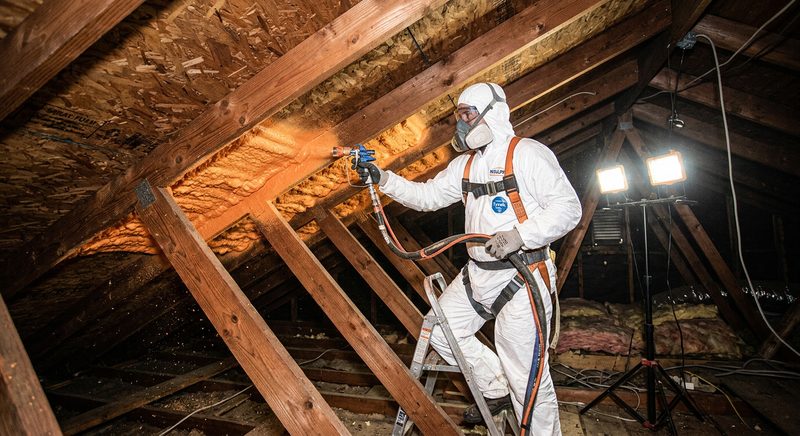
My name's Neal. See the DOE spray foam insulation guide for more detail. I run DFW Attic Insulation. If you want to turn your attic into living space, the first step is insulating the roof deck, not the attic floor. Spray closed-cell spray foam directly on the underside of the roof sheathing. It creates a continuous air seal and thermal barrier in one step. The U.S. Department of Energy confirms that converting a vented attic to conditioned space requires insulating at the roof deck. Closed-cell foam delivers R-6 to R-7 per inch. That means 4 inches of foam gives you roughly R-24 at the roofline. The foam bonds to the wood, stops air leaks, and keeps outdoor humidity out. Your attic becomes part of your home's conditioned envelope. No more hot or cold zones. No more drafty rooms upstairs. The foam also adds structural strength to the roof deck. In DFW, that's a real bonus during high winds and hail.
Why Vented Attics Fail for Living Space
A typical DFW attic is vented. Outside air flows through soffit and ridge vents. That works fine for storage. It does not work for living space. The attic temperature swings with the weather. In summer, it hits 140 degrees. In winter, it drops to freezing. You can try to insulate the attic floor and run HVAC ducts up there, but the ducts lose energy. The rooms below still feel uneven. More importantly, a vented attic cannot be finished for code. The International Residential Code and DFW amendments require that finished attics meet the same insulation and air sealing standards as the rest of the house. See the Energy Star sealing guide for more detail. Spray foam on the roof deck solves this by moving the thermal boundary to the roof. No more venting. No more hot ducts. The attic becomes a conditioned space just like any other room. Building America research shows that spray foam provides insulation and air sealing in one application, which is critical for meeting energy codes.
DFW Climate Demands a Different Approach
DFW is humid. Summer dew points often hit 70 degrees. That moisture wants to get inside your vented attic. With fiberglass batts on the attic floor, warm humid air can condense on the cool underside of the roof deck. That leads to mold and rot. Spray foam on the roof deck changes this. The foam is a vapor barrier. For closed-cell foam, 2 inches typically meets code for vapor retarder in climate zone 3 (DFW is zone 3). The Building Science Corporation recommends closed-cell foam in hot-humid climates because it controls moisture at the roof plane. The attic stays dry. The foam also prevents the stack effect from pulling humid air into living spaces. One fact: a properly insulated conditioned attic can stay within 5 degrees of the set temperature of your home. That makes the upstairs livable without oversized equipment. I have seen attics converted into bedrooms, home offices, and workout rooms that stay comfortable year-round.
The Cost Advantage Over a Home Addition
Adding a room to your house costs $200 to $400 per square foot in DFW. HomeAdvisor reports roof-related attic insulation work averages $1,700 to $2,500, with Angi showing DFW pricing at $1 to $3 per square foot for standard blown-in installation. Foundation work, framing, roofing, siding, permits. Attic conversion with spray foam on the roof deck typically runs $15 to $30 per square foot for the insulation and air sealing. That's a fraction of the cost. You already have the structure and the roof. You don't need new foundation or exterior walls. You just need to insulate the roof deck, run ductwork, and finish the interior. The spray foam itself pays back in energy savings. A conditioned attic reduces the load on your HVAC system because the ductwork is inside the thermal envelope. The U.S. Department of Energy estimates that sealing and insulating ducts can improve HVAC efficiency by up to 20 percent. In DFW, that is real money on your electric bill. Plus, you add conditioned square footage to your home's appraised value without the cost of an addition.
What to Know Before You Start
Not every attic can be converted. I tell homeowners when NOT to buy spray foam. If your attic has less than 7 feet of headroom at the peak, it's probably not worth the investment. Building codes require minimum ceiling height for habitable rooms. If the roof pitch is shallow, you might not meet that. Also check the roof structure. If you have a truss system with webs in the way, converting to living space requires re-engineering. That adds cost. For the foam itself, closed-cell is the right choice for roof deck applications. Open-cell foam absorbs moisture and is not a vapor barrier. In DFW humidity, open-cell on the roof deck can lead to rot. I recommend at least 3 inches of closed-cell for R-19 to R-21. Some clients go to 5.5 inches for R-38, which exceeds code. The foam must be applied by a certified installer. The surface must be clean and dry. Proper thickness and coverage are critical for performance.
The Air Sealing Bonus That Changes Everything
Spray foam does more than insulate. It seals every gap, crack, and seam in your roof deck. In a typical DFW attic, the air leaks add up to the equivalent of a open window. Those leaks let hot outdoor air in and conditioned air out. They also let moisture in. When you spray foam on the roof deck, you stop all those leaks at once. No more thermal bridging through the rafters. No more dusty attic air migrating into your bedrooms. The whole house becomes tighter. That means your HVAC system runs less often. It also means your home stays more comfortable. One fact: a conditioned attic with spray foam can reduce the cooling load on the second floor by 30 to 40 percent compared to a vented attic with ductwork. That is based on field studies from Building America. The air sealing alone often pays for the foam within a few years through lower energy bills.
Why You Need a Contractor Who Understands Attics
Spray foam on the roof deck is not a DIY job. It requires special equipment, training, and knowledge of building science. The foam chemistry is sensitive to temperature and humidity. If applied wrong, it can smell, shrink, or fail to adhere. More importantly, the system must be designed for the whole house. The attic is now part of the conditioned space. That affects how your HVAC system operates. I see homeowners who installed spray foam without addressing ventilation or HVAC sizing. They end up with high humidity or short-cycling equipment. That is why I offer a full attic insulation assessment before any work. We check the roof condition, existing insulation, air leakage, ductwork, and HVAC capacity. We also verify that the attic meets local codes for finished space. If it doesn't, we tell you upfront. That saves you money and frustration. Spray foam installation done right makes the attic a true living space.
Frequently Asked Questions
Can I install spray foam on the roof deck myself?
How thick does spray foam need to be on the roof deck?
Will spray foam prevent mold in my attic conversion?
Do I still need attic ventilation after applying spray foam on the roof deck?
Can I leave existing fiberglass insulation in the attic floor when doing a roof deck conversion?
Does spray foam add value to my home in DFW?
Ready to turn your DFW attic into livable space? Call (469) 895-2695 for a free attic inspection and spray foam estimate. I'll tell you if your attic is a good candidate and what it will cost. If you want a straight answer on your attic, call me at (469) 895-2695. I'll inspect it with a thermal camera, tell you exactly what you need, and give you a written quote. No upsell. No pressure.
P.S. Every attic is different. The numbers above are ballpark estimates based on DFW averages. Call us at (469) 895-2695 and we'll come take a look with a thermal camera, give you a written quote, and tell you honestly if you even need anything. No upsell. No pressure.
Get a free estimate
Fill out the form and we'll get back to you within 24 hours. No pressure, no upsells.
Neal runs DFW Attic Insulation, a local crew serving the entire Dallas-Fort Worth metroplex. He started in roofing and construction over two decades ago and now specializes in attic insulation, air sealing, and ventilation. He believes in honest advice — he'll tell you if you don't need anything.