
Spray Foam vs Fiberglass Attic Insulation: DFW Honest Comparison
Spray foam or fiberglass for your DFW attic? Neal compares R-value, cost, air sealing, and moisture to help you decide what's actually worth it.
The Answer: Fiberglass for the Attic Floor, Spray Foam for the Roof Deck
Blown-in fiberglass is the better value for a DFW attic floor. Spray foam is better for a roof deck or an attic becoming living space. When people argue spray foam vs fiberglass attic insulation like it's a contest, they're missing that the two aren't rivals — they're different tools for different parts of the house. Most homeowners don't need spray foam, and I'll tell you flat out when that's the case, even though I install the stuff.
Here's the number that makes the decision. Fiberglass blown-in hits R-38 on a 1,500-square-foot attic floor for about $1,300 to $2,200. Open-cell spray foam runs $2,300 to $3,300. Closed cell runs $3,500 to $6,000. Same R-value, two to three times the price.
Fiberglass: The Value Play for a Vented Floor
Fiberglass is cheap, proven, and hits the R-38 this climate zone needs with 12 to 14 inches of depth. For a vented attic you use as storage, it's the smart buy. The catch is that fiberglass doesn't air-seal. It slows conducted heat, but air leaks still bleed in around it. That's why it pairs with a separate air-sealing pass.
Spray Foam: The Air-Sealing Premium
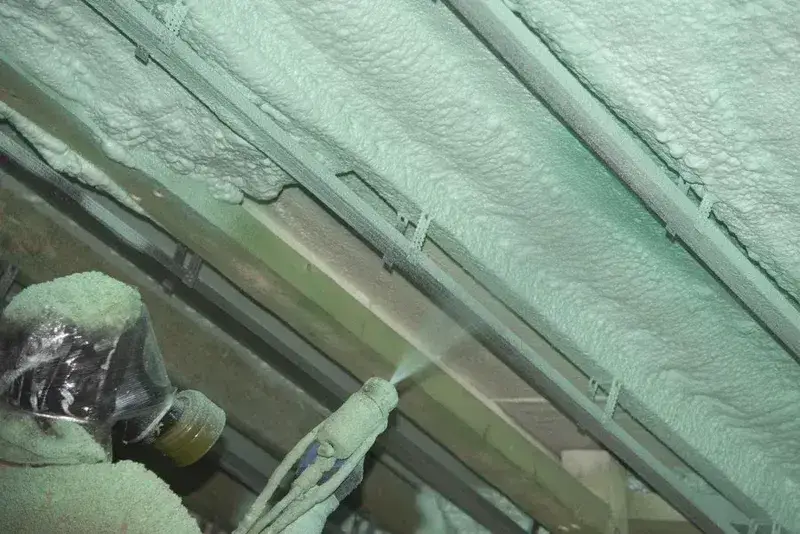
Spray foam's entire advantage is that it seals and insulates in one step. It bonds to the surface and blocks the air leaks that let summer heat in. That built-in seal is what you're paying the premium for. On a roof deck, that seal keeps the whole attic inside the conditioned envelope. On a flat floor, fiberglass plus a good air-sealing job gets you most of the same result for less.
The Moisture Difference
Fiberglass lets moisture move through. That's fine in a vented attic that's allowed to breathe. Closed-cell spray foam is a vapor barrier. It belongs on a roof deck where it protects the framing, not on a vented attic floor where it traps moisture rising from below. Get that wrong and you'll find out why open vs closed matters.
Setting the Comparison Straight
People compare "spray foam vs fiberglass" like they're the same tool for the same job. They're not. Fiberglass is an insulation. Spray foam is an insulation plus an air barrier plus, in closed cell, a vapor barrier. The right question isn't which is better. It's whether the attic is getting lived in. Living space and roof decks earn spray foam. Empty vented attics earn fiberglass.
When Fiberglass Is Clearly the Right Call
Standard vented attic, store boxes, ducts run below the insulation, just want lower cooling bills. That's fiberglass to R-38, every time. Add a radiant barrier if the real problem is the attic cooking from radiant heat. You get the cooling for a fraction of the spray foam cost.
When Spray Foam Is Clearly the Right Call
Attic conversion, bonus room, ducts running against the roof, cathedral or vaulted ceilings, rim joists, crawl spaces. Anywhere the air seal and the high R-per-inch matter more than the price. That's spray foam's territory.
The R-Value Numbers Side by Side
Fiberglass batts and blown-in fiberglass run about R-3.2 to R-3.8 per inch. Open-cell spray foam is R-3.5 to R-4.0 per inch. Closed cell is R-6.0 to R-6.5 per inch. What that means in practice: to hit R-38 you need roughly 12 to 14 inches of blown-in fiberglass, about 4 inches of open cell, or just over 2 inches of closed cell. The Department of Energy publishes the current recommended levels for climate zone 3, and the ENERGY STAR target for DFW attics is R-38 minimum, R-49 where it fits. That's your yardstick regardless of which material you pick.
Why the "Upfront vs Ongoing" Math Differs
Here's a side nobody talks about. Fiberglass is cheap to put in but doesn't keep saving after the first few years — its value is locked in at install. Spray foam costs more up front, but the air seal it builds keeps working every summer. If you're in the house for five years, fiberglass usually wins on total cost. If you're in it for fifteen and you're fighting a hot upstairs, the spray foam air seal can close that gap. Neither is "wrong." They just pay back on different timelines.
The Honest Recommendation
Start with air sealing if your attic is leaky. Then put fiberglass on the floor to R-38. That combo runs the least and covers the DFW climate. Move to spray foam only when the space gets lived in or the ducts sit at the roofline. I've saved homeowners thousands by steering them away from spray foam they didn't need, and I'll do the same for you.
Frequently Asked Questions
Is spray foam better than fiberglass for attic insulation?
How much more does spray foam cost than fiberglass?
Does fiberglass or spray foam have a higher R-value?
Which is better for air leaks?
Can I combine fiberglass and spray foam?
Is fiberglass good enough for a DFW attic?
Call me, Neal, at (469) 895-2695 and I'll tell you which one your DFW attic actually needs. Sometimes that answer saves you a couple thousand dollars, and I'm glad to give it.
Get a free estimate
Fill out the form and we'll get back to you within 24 hours. No pressure, no upsells.
Neal runs DFW Attic Insulation, a local crew serving the entire Dallas-Fort Worth metroplex. He started in roofing and construction over two decades ago and now specializes in attic insulation, air sealing, and ventilation. He believes in honest advice — he'll tell you if you don't need anything.