
Spray Foam for Lakewood's Older Homes
Lakewood's Attics Are Different
Lakewood is one of Dallas' oldest neighborhoods. Most homes here were built between the 1920s and 1950s. That means your attic has a few things in common with your neighbors' attics. The original insulation is probably old fiberglass batts or even vermiculite. Over 60% of Lakewood homes still have the same insulation they were built with. That stuff gets compacted, dusty, and stops working. The bigger issue is air leaks. Old homes were built before anybody worried about energy efficiency. The framing has gaps. The ductwork leaks. The attic stairwell isn't sealed. Spray foam handles all of that in one step. It fills every gap and seals the attic envelope tight. It's not the cheapest option, but it works better than anything else on old construction.
The Two Kinds of Spray Foam for Attics
There are two main types. Open-cell spray foam is softer and cheaper. It expands into every crack and crevice. Closed-cell spray foam is denser and harder. It also adds structural strength to the roof deck. For Lakewood's older homes, I usually recommend open-cell spray foam for the attic floor and closed-cell for the roof deck. Open-cell stops air leaks and adds R-value at a lower cost per inch. Closed-cell gives you a higher R-value per inch and blocks moisture better. The Department of Energy has a good breakdown of when to use each type. Your home's age and style matter too. A Tudor with a steep roof might need a different approach than a mid-century ranch with a low-slope attic. A good installer will look at your whole attic before choosing.
Why Lakewood Homes Need Air Sealing First
In Lakewood, the homes were built with balloon framing in many cases. That means the wall cavities go straight from the foundation to the attic. Hot air rises through those cavities in the summer. Cold air falls through them in winter. Insulation alone won't stop that airflow. You have to seal the top plates where the walls meet the attic floor. You also have to seal around plumbing vents, electrical wires, and chimney chases. Spray foam does that sealing automatically as it's applied. But some areas need hand-sealing with caulk or foam before the spray goes in. The Environmental Protection Agency says air sealing plus insulation is the most effective combination for older homes. If you only add insulation without sealing, you're leaving half the job undone.
What to Expect With Spray Foam Installation in Lakewood
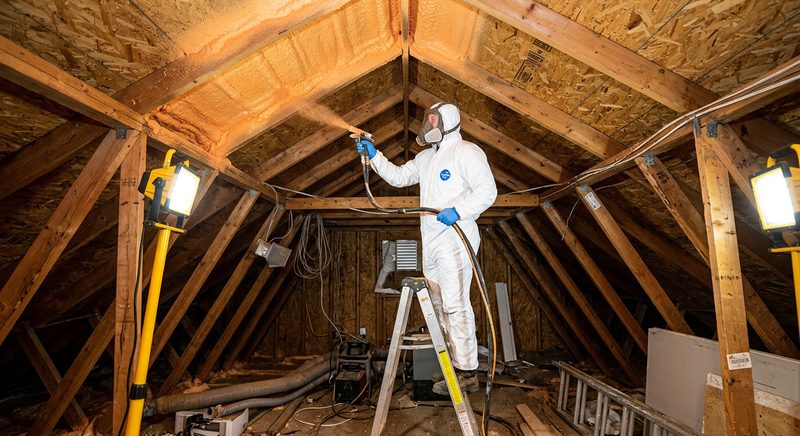
The job usually takes one full day for a typical Lakewood home. The crew sets up containment in the attic. They protect your living space with plastic sheeting. They seal the attic access point from the inside. Then they mix the chemicals on site and spray the foam onto the roof deck or attic floor. The foam expands in seconds and hardens within minutes. It smells strong during application, so you'll want to stay out of the house for a few hours. Once it cures, it's odorless and safe. Spray foam can be applied to attic floors or roof decks. For Lakewood homes with finished attics or storage space, roof deck application works best. For unfinished attics with ductwork and stored items, attic floor application makes more sense. Your electric rate in Lakewood runs about 12.5 cents per kilowatt-hour. That's on the higher side for DFW. Better insulation pays back faster when your power costs more.
Common Mistakes With Spray Foam in Older Homes
I've seen some bad spray foam jobs in Lakewood. The worst ones happen when someone sprays foam over wet or rotted wood. If your roof has a leak, fix it before you insulate. Trapping moisture behind foam causes rot and mold. Another mistake is spraying too thin a layer. You need at least three inches of closed-cell or six inches of open-cell to get the right R-value. Some installers cut corners to lower the price. They leave thin spots that let heat pass through. A third mistake is forgetting about ventilation. If you spray foam on the roof deck, you can't vent the attic anymore. That changes how your whole roof system breathes. The right approach depends on your roof type and climate zone. Lakewood is in climate zone 3, which is hot and humid. That requires a specific strategy for moisture control. A bad spray foam job can hurt more than it helps.
How Spray Foam Compares to Other Options for Lakewood Homes
Blown-in fiberglass is cheaper but doesn't seal air leaks. The old batts in your attic let air move freely. Blown-in fiberglass slows heat flow but doesn't stop the drafts. Radiant barrier reflects heat but doesn't insulate. It helps in summer but does nothing in winter. Spray foam does both. It insulates and air-seals at the same time. For a Lakewood home with original construction, that's a big deal. Your attic probably has gaps around every wire and pipe. Spray foam fills those gaps. Energy Star's home sealing guide explains why sealing is more important than insulating for older homes. If you live in a Lakewood Tudor, Craftsman, or Colonial Revival, your attic has unique shapes and angles. Spray foam conforms to any shape. It works in tight corners, around dormers, and under low roof slopes. Other insulation types leave gaps in those awkward spaces.
** ** ** ** ** **
Can you install spray foam over existing insulation in a Lakewood home?
How long does spray foam last in a Lakewood attic?
Will spray foam damage my Lakewood home's roof?
Do I need a permit for spray foam in Lakewood?
Is spray foam worth it for a home I plan to sell soon?
What about vermiculite insulation in pre-1970s Lakewood homes?
Get a free estimate for spray foam in Spray Foam for Lakewood's Older Homes
Fill out the form and we'll get back to you within 24 hours. No pressure, no upsells.
Also serving: Attic insulation service details · Attic insulation cost guide · Contact us
Nearby cities: Addison · DeSoto · DeSoto · DeSoto · Farmers Branch · All DFW locations
Last updated: 2026-05-29