
Lower AC Load Before Solar: DFW Radiant Barrier Guide
Lower your cooling load before adding solar panels in DFW. Radiant barrier cuts attic temps 25-40F. Smaller system, bigger savings. Neal explains how.
Start with the attic, not the roof
My name is Neal. I run DFW Attic Insulation. If you are planning solar panels, I want you to do one thing first. Fix your attic. Most homeowners in DFW call me after the solar installers leave. They say their system is undersized or their bills are still high. That happens because they skipped the step that makes solar work hard. Your AC uses 50 to 60 percent of your summer electricity bill. Solar panels cover that load. But if your attic is dumping 140 degree air into your home, your AC runs nonstop. You need a bigger solar system to keep up. The smarter move is cutting the load first. A radiant barrier and proper insulation can drop your attic temperature by 25 to 40 degrees Fahrenheit. That means your AC runs less and your solar system can be 20 to 30 percent smaller. The federal 30 percent tax credit applies to both solar panels and radiant barrier. You get the same benefit on a smaller investment.
The IECC 2021 recognizes solar-ready construction requirements in Section R404 for Climate Zone 3. The code requires R-38 minimum attic insulation with U-0.030. Reducing your home energy load through proper attic insulation means you need a smaller solar array to achieve net-zero, which the IECC acknowledges as a cost-effective compliance path.
DFW cooling load is brutal
DFW sees over 3,000 cooling degree days each year. That is not a small number. It means your AC runs hard from May through October. A typical 2,000 square foot home in DFW spends $200 to $400 per month on cooling in the summer. HomeAdvisor reports solar-related home improvements average $2,000 to $5,000, while Angi shows DFW radiant barrier installation runs $1,200 to $2,500. That load is almost entirely driven by your attic. The sun beats down on your roof for 10 to 12 hours a day. The heat radiates into the attic and soaks into your insulation and ductwork. Your AC has to pull that heat out of the living space. Most homes in DFW have R-19 or R-30 insulation. That is not enough for this climate. The Department of Energy recommends R-38 to R-60 for our region. I see attics every week that are 30 to 40 degrees hotter than the outdoor air. That heat pushes down into your ceilings and walls. Your AC fights a losing battle. The solution is not a bigger AC or more solar panels. It is stopping the heat at the source.
How radiant barrier changes the math on solar
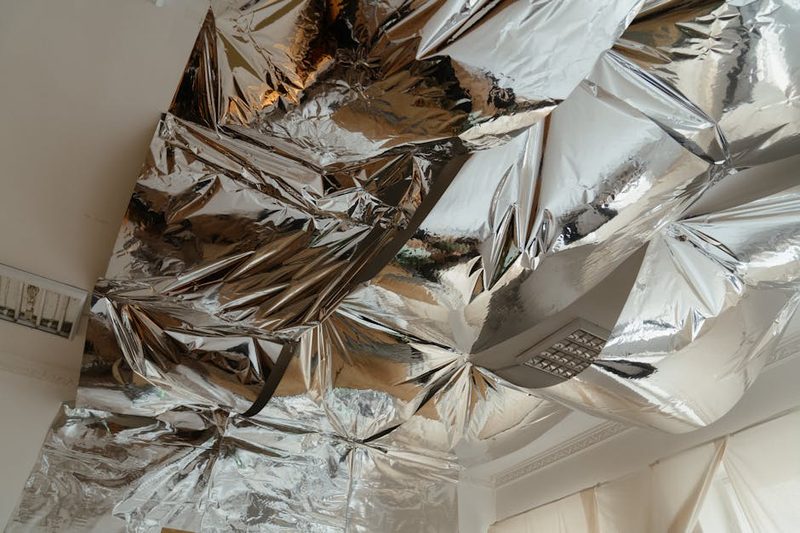
A radiant barrier is a reflective material installed on the underside of your roof deck. It reflects radiant heat back out of the attic instead of letting it soak into the insulation. In practice the two compound: you reduce the load first, then size the solar array to the smaller load, so you buy fewer panels for the same comfort. ENERGY STAR has the insulation half of that math. In DFW, a radiant barrier alone can drop attic temperatures by 25 to 40 degrees. That directly reduces your cooling load. A typical 8 kW solar system covers a 2,000 square foot home in DFW. With a radiant barrier and proper insulation, you can often size down to a 5.5 or 6 kW system. That saves you thousands on the solar install. Your payback period shrinks. And your monthly bill drops further because your AC uses less power. The radiant barrier costs around $0.50 to $1.00 per square foot installed. The solar you avoid buying costs roughly $2.50 to $3.00 per watt. The math works in your favor.
The order matters: attic first, solar second
I tell homeowners the same thing every time. Fix the envelope before you buy generation. If you install solar panels on a house with a leaky, hot attic, you are paying for waste. Your solar system has to cover the energy that your attic is throwing away. That is expensive. A whole-home approach starts with the attic. Seal air leaks. Add insulation to R-38 or higher. Install a radiant barrier. Then size your solar system based on your reduced load. Some solar companies in DFW will tell you that radiant barrier is optional. They want to sell you a bigger system. I have no stake in your solar purchase. I only care about your attic. But I can tell you that every house I have done this for ended up with a smaller solar quote. One customer in Frisco dropped from a planned 10 kW system to a 7 kW system after we did the attic work. He saved $6,000 on solar and $80 a month on his electric bill.
When not to buy a radiant barrier
I will tell you when not to buy this. If you have spray foam insulation on the underside of your roof deck, a radiant barrier does nothing for you. Spray foam already stops radiant heat transfer. Adding foil on top is wasted money. If your attic is already conditioned space with HVAC vents, skip the radiant barrier. It will not help. If your roof has no direct sun exposure because of heavy tree cover, the benefit drops significantly. Do not buy a radiant barrier if your insulation is already R-38 or higher and your attic is not overheating. Check your attic temperature on a 95 degree afternoon. If it is under 110 degrees, you are probably fine. And do not buy a radiant barrier from a door-knocker who tells you it will cut your bill in half. A 25 to 40 degree drop is realistic. A 50 percent bill reduction is not. I give honest assessments. If you do not need it, I will tell you.
Combined savings from attic work plus solar
The total savings from pairing attic work with solar are substantial. The Sunflowers Energy / NREL research bundle showed 40 percent savings from combined roof, insulation, and solar upgrades. In DFW, I see customers hit 55 to 80 percent total savings when they do radiant barrier, attic insulation, and solar together. Here is how it works. Radiant barrier cuts attic temperature rise by 25 to 40 degrees. That reduces your cooling load by 25 to 35 percent. Adding attic insulation from R-19 to R-49 cuts another 15 to 20 percent. Your total cooling load drops by 40 to 55 percent. Your solar system only needs to cover the remaining load. That means you buy a smaller system, pay less upfront, and get the same 30 percent federal tax credit on both the radiant barrier and the solar panels. Your monthly bill can drop to near zero in the spring and fall. Your summer bills will be a fraction of what they were.
What a DFW homeowner should do next
Call me before you sign a solar contract. I will come to your home and inspect your attic. I check your insulation depth, your air sealing, and your attic temperature. I will tell you exactly what needs to change and what does not. If you need a radiant barrier, I will quote it. If you do not need it, I will tell you that too. The solar company will then size your system based on your actual home performance instead of a generic square footage number. You will get a smaller system, a lower price, and faster payback. I have done this for hundreds of homes across DFW. It works. The 30 percent federal tax credit applies to both attic insulation and radiant barrier installations. You can claim it on your next tax return. Do not let your solar installer tell you the attic is fine without looking. Call me first.
Frequently Asked Questions
How much does a radiant barrier cost in DFW?
Will a radiant barrier really let me buy a smaller solar system?
Does the federal tax credit apply to both radiant barrier and solar panels?
Can I install radiant barrier myself to save money?
Does radiant barrier work with existing insulation?
Should I install solar or radiant barrier first?
Call me at (469) 895-2695 to schedule an attic inspection before you buy solar. I will tell you exactly what your attic needs.
Get a free estimate
Fill out the form and we'll get back to you within 24 hours. No pressure, no upsells.
Neal runs DFW Attic Insulation, a local crew serving the entire Dallas-Fort Worth metroplex. He started in roofing and construction over two decades ago and now specializes in attic insulation, air sealing, and ventilation. He believes in honest advice — he'll tell you if you don't need anything.