
Spray Foam Attic Insulation: Is It Worth It in DFW?
Spray foam attic insulation seals and insulates in one step, but it's not right for every DFW attic. Neal explains open vs closed cell, cost, and when it's worth it.
The Answer: Yes for Roof Decks, Rarely for Attic Floors
Spray foam attic insulation is worth it when it air-seals a roof deck. It's usually not worth it on an attic floor. That's the honest answer, and it's the one I give DFW homeowners every time they ask. Spray foam is the only insulation that seals and insulates in one step. It stops the heat from entering through the roof and it blocks air leaks at the same time. But on a standard attic floor, cheaper blown-in fiberglass hits R-38 for about a third of the cost.
Here's the number that matters: in DFW's climate zone 3, the Department of Energy recommends R-38 minimum for attics. Spray foam can get you there in two to four inches of closed cell. Fiberglass needs twelve to fourteen inches. Same R-value, very different price tag.
The Two Types, Made Simple
Open-cell spray foam runs R-3.5 to R-4.0 per inch. It's lighter, cheaper, and lets moisture pass through. Closed-cell runs R-6.0 to R-6.5 per inch. It's denser, costs more, and acts as a vapor barrier. In DFW's humid climate, that moisture behavior matters as much as the R-value.
Closed cell is the one that also air-seals. When it bonds to the underside of your roof deck, it becomes the air barrier, the insulation, and the vapor barrier all at once. Open cell seals air less aggressively but costs about a dollar less per square foot.
Where Spray Foam Shines in a DFW Attic
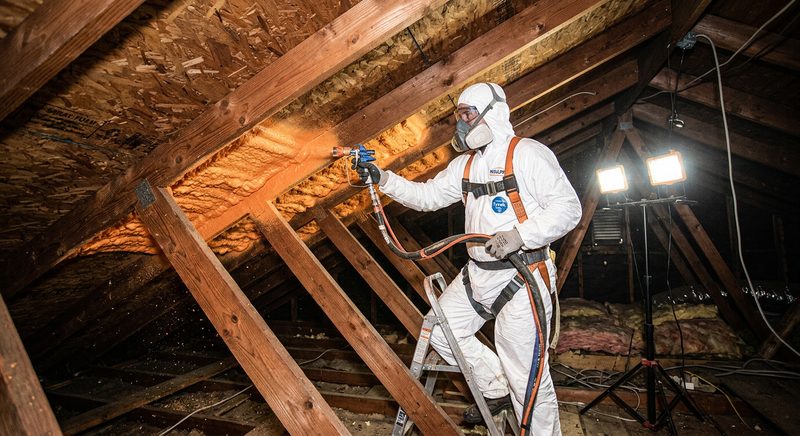
The best place for spray foam is the underside of the roof deck in an unvented attic. Think a finished attic, a bonus room, or a converted space. There, you want the roof itself insulated, not the floor. Spray foam on the roof deck turns that attic into conditioned living space. It also keeps your HVAC ducts — which often run through the attic — inside the insulated envelope instead of out in a 140-degree furnace.
Here's the Catch Most People Miss
Your attic hits 140 to 150 degrees in a DFW July afternoon. That heat radiates down all day no matter what insulation sits on the floor. Spray foam on the deck stops it at the source. But if your attic is a vented attic with flooring under the ceiling joists, and you just want to cut cooling bills, blown-in fiberglass to R-38 does the job for less money. You don't need spray foam's air-sealing magic for a space nobody lives in.
I've also seen attics ruined by spray foam done wrong. Closed-cell foam sprayed into a vented attic traps heat and moisture. It turns a small mold problem into a big one. The vapor barrier that helps a cathedral ceiling hurts a vented attic. Air sealing and proper ventilation matter as much as the foam itself.
What Spray Foam Attic Insulation Costs
Open-cell spray foam on the roof deck typically runs $1.50 to $2.20 per square foot. Closed cell runs $2.50 to $4.00 per square foot installed. A typical DFW roof deck of 1,500 square feet runs $3,500 to $6,000 for closed cell. You can hit R-38 with about two inches of closed cell or three to four inches of open cell.
Compare that to attic insulation: blown-in fiberglass to R-38 on that same 1,500-square-foot floor runs $1,300 to $2,200. The spray foam is two to three times the price. You pay for the air-sealing. Make sure you actually need it.
When Spray Foam Is the Right Call
Spray foam attic insulation earns its cost in three situations. First, an attic being converted to living space. Second, a home with the ducts running through a cathedral or vaulted ceiling. Third, a home where air leaks into the attic can't be sealed any other way because the framing hides them.
When Blown-In Fiberglass Is the Right Call
For the other ninety percent of DFW attics, blown-in fiberglass is the smarter buy. It's cheaper, it's proven, and it reaches the R-38 the climate zone needs. Add radiant barrier if your real problem is radiant heat cooking the attic. That combination gives you the attic cooling for a fraction of the spray foam cost.
How the Installation Goes
If we spray foam, we first check for active leaks, mold, or moisture. Those get fixed before any foam goes down. Then the crew protects the living space, monitors the temperature, and applies the foam to the correct thickness in even passes. We finish with a post-installation inspection to confirm coverage and cure. That inspection is the step a lot of cheap installers skip.
Frequently Asked Questions
Is spray foam attic insulation better than fiberglass?
How much does spray foam attic insulation cost in DFW?
What R-value does spray foam need in a DFW attic?
Can spray foam cause mold in the attic?
Should I spray foam the attic floor or the roof deck?
Is spray foam worth the extra cost?
Call me, Neal, at (469) 895-2695 to talk through whether spray foam is the right move for your DFW attic. I'll give you a straight answer — including when it isn't.
Get a free estimate
Fill out the form and we'll get back to you within 24 hours. No pressure, no upsells.
Neal runs DFW Attic Insulation, a local crew serving the entire Dallas-Fort Worth metroplex. He started in roofing and construction over two decades ago and now specializes in attic insulation, air sealing, and ventilation. He believes in honest advice — he'll tell you if you don't need anything.